
MFRR Partners warn that a new wave of repressive legislation threatens Georgian independent journalism with imminent extinction.
We, the undersigned press freedom, journalists, and freedom of expression organisations, express deep concern over the recently proposed legislation, increasing threats to journalists’ safety, and the broader decline of media freedom in Georgia. We urge the international community, especially the European Union (EU), to address the ruling Georgian Dream (GD) party and support Georgia’s embattled independent media sector.
On 24 February 2025, the Georgian Dream ruling party and its satellite party People’s Power introduced amendments to the Law on Broadcasting, strengthening the censorship powers of the broadcast regulator and restricting “foreign powers” from funding broadcasters or co-financing programmes. A “foreign power” is broadly defined, and includes foreign governments, non-citizens, and foreign based organisations.
The amendments expand the powers of the Georgian National Communications Commission (GNCC) to regulate factual accuracy, fairness, and privacy, previously overseen through self regulation. The GNCC will be able to issue penalties of up to 3% of annual revenue or even revoke a broadcaster’s license for breaching the new rules These changes will empower the GNCC to act as the government’s censor to silence critical media outlets.
On March 3, the Parliament’s Legal Affairs Committee passed the first reading of a new version of the “Foreign Agent Law,” entitled the “Foreign Agents Registration Act,” which could impose fines of up to $10,000 or imprisonment of up to five years for non-compliance.
According to the GD party, the legislation is a “Georgian translation” of the U.S. FARA law. The explanatory note attached to the draft law states that the primary reason for introducing a ‘precise analogue’ of FARA is that the majority of civil society organisations receiving foreign funding have refused to register under the existing foreign agents law, adopted in May 2024, titled the “Law on Transparency of Foreign Influence.”
Unlike Georgia’s legislation, which broadly targets media and NGOs, the U.S. FARA was adopted in 1938 to regulate lobbying for foreign adversaries, such as Nazi Germany. The scope of the US FARA has been significantly limited through case law and has been rarely employed beyond requiring the registration of foreign lobbyists.
While the Georgian draft includes exemptions such as broadcasting networks, and scientific, academic, religious, educational, and artistic activities, its scope is likely to be applied much more broadly, including media, due to a highly politicised administration and the absence of judicial independence.
Without the usual democratic safeguards these laws are likely to be weaponized to silence the government’s critics.
The current “Transparency of Foreign Influence” law already empowers the Ministry of Justice to conduct investigations into organisations in receipt of foreign grants, allowing for direct interference in the activities of independent media, many of which rely heavily on foreign grants.
These legal initiatives are part of a comprehensive government crackdown on the media over the past year that has seen the rapid deterioration of press freedom and of targeted violence against journalists, amid a broader democratic backsliding.
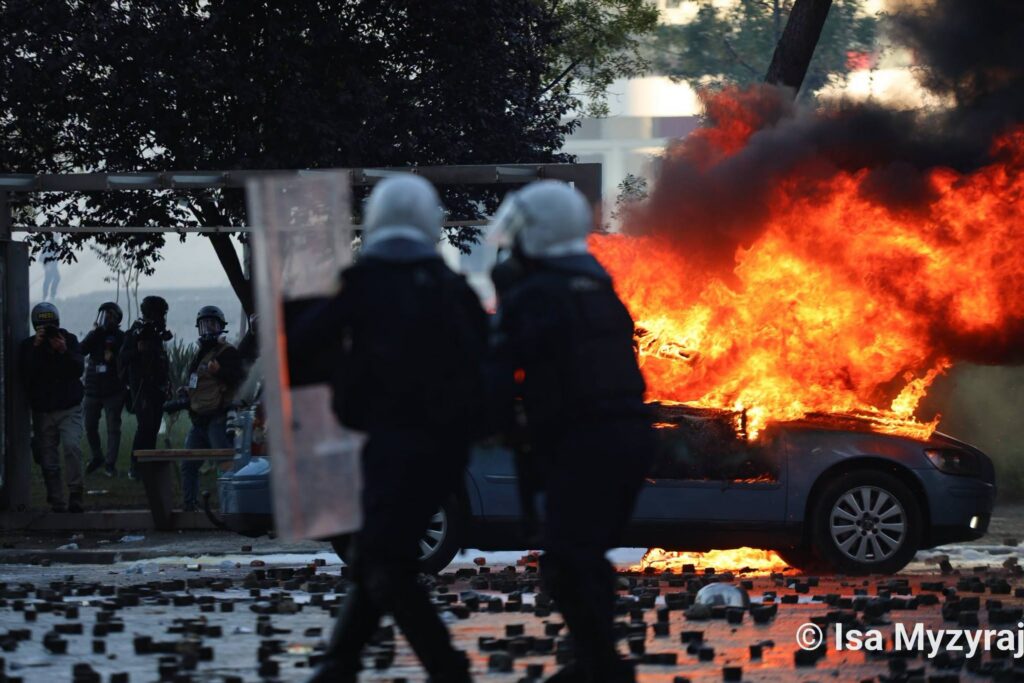
Since the start of the post-election protests in November 2024 dozens of journalists have been viciously beaten, verbally assaulted, threatened, and detained. Their equipment has been confiscated and destroyed, and their reporting has been repeatedly obstructed.
Meanwhile, Mzia Amaglobeli, a veteran Georgian journalist and the founder and director of two of the country’s most prominent independent media organisations, has been unjustly held in pre-trial detention since her arrest in early January.
The Georgian Public Broadcaster (GPB), which has long been an instrument of the Georgian Dream government, has suppressed efforts by journalists who try to report free of political control.
The extensive capture of political institutions including the judiciary means that impunity for crimes against journalists remains widespread, with investigations often being insufficient and perpetrators rarely held accountable, particularly those from the police.
In addition, amendments to the Code of Administrative Offences and the Law on Assemblies and Demonstrations, adopted in a rushed manner, introduce harsher penalties and significantly higher fines for administrative offences, further undermining and restricting the freedom of assembly and expression.
The deterioration of press freedom in Georgia, amid rising authoritarianism, is extremely alarming—and, if continued, will have wider implications for democracy in the region.
We urge the Georgian government to stop the persecution of independent newsrooms and media professionals. We further reiterate our call to the European Union to place effective pressure on the Georgian Dream ruling party to withdraw the new legislation impacting media and halt the broader crackdown on journalism and civil society.