
In the face of rising digital manipulation, shrinking civic space and collapsing media business models, the European Democracy Shield offers an important opportunity to ensure safety of journalists and media viability, among other things, but only if turned into concrete action. This is what MFRR aims to follow.
On 13 November 2025, the European Commission adopted its European Democracy Shield, the first comprehensive, flagship strategy for strengthening democratic resilience within the bloc, with a key focus on free and independent media, fighting disinformation and creating healthier information ecosystems to protect European values and security.
The Media Freedom Rapid Response (MFRR) partners welcome the fact that many priorities from our submission on media freedom and security of journalists, as well as EPD-led joint submission of 65 organisations, have been incorporated in the text.
Strengthening the economic viability of media, and updating the EU Recommendation on the safety of journalists and to combat Strategic Lawsuits Against Public Participation (SLAPPs), which have become a pervasive tool for silencing critical voices, are important priorities. Media and press freedom priorities are defined under the umbrella of the second focus of the European Democracy Shield, aimed at strengthening democratic institutions, free and fair elections and free and independent media. A comprehensive list of commitments has been developed to address economic viability, safety of journalists, influence of AI and disinformation.
The MFRR calls for these protections to be retained and enforced. We also call for further protections of journalists from digital pressures and harmful legislation to be introduced. The MFRR also calls for the strict implementation and timeline for the implementation of these commitments, as well as for strengthening the European Democracy Shield enforcement in relation to the European Media Freedom Act (EMFA), and Digital Services Act (DSA).
Below we outline how the EU Commission’s priorities reflected the MFRR submission on media freedom and protection of journalists.
- Economic viability
Tackling the changing business models for media and the advertising market, now increasingly dominated by online platforms that divert funding away from independent media, is one of the main issues that media is facing in terms of its viability. The commitment to reviewing the Audiovisual Media Services Directive and the Directive on copyright in the Digital Single Market is a positive step toward ensuring the economic viability of the media sector. However, the MFRR cautions that these measures must be implemented swiftly and effectively to prevent further erosion of media pluralism.
The Shield’s detailed section on funding for democracy support is particularly significant. The organisations note the Commission’s acknowledgment that additional financial resources are necessary to sustain independent media, especially in the EU neighbourhood and candidate countries. Prioritisation of core funding for independent media is vital for countering the economic pressures imposed by dominant online platforms. The creation of the Media Resilience Programme and the new MFF Global Europe could be important additions to ensure impartiality and core support in the media ecosystem. It is welcoming that media is recognised as a part of defence budgets, but we urge for the precise clarification of the timeline and understanding of the scope Media Resilience Programme and MFF will have.
- Safety of journalists
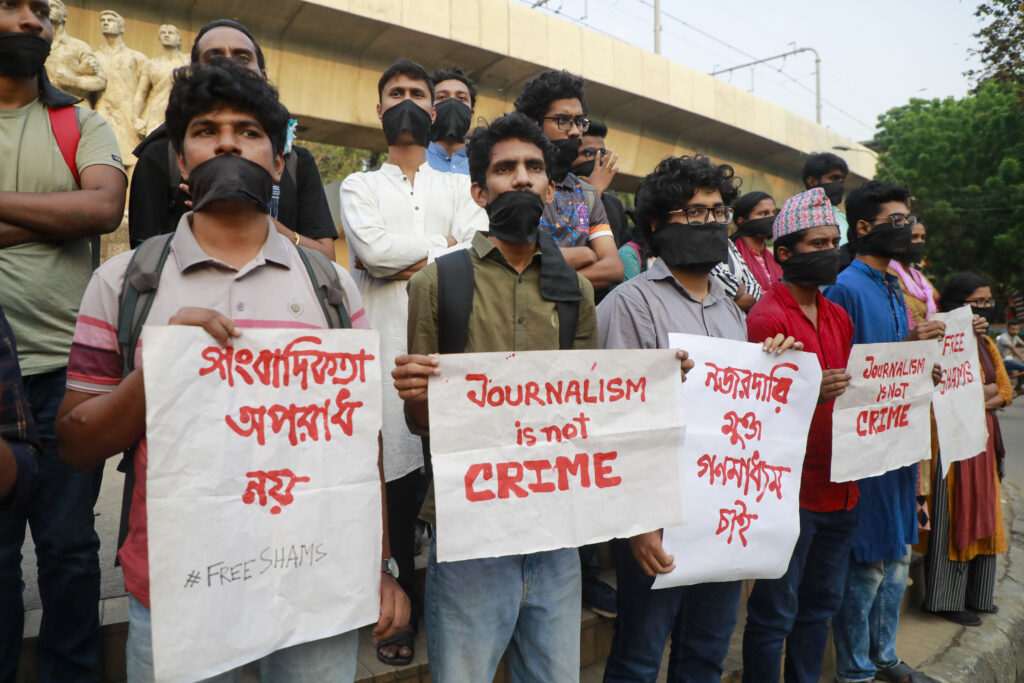
One of the key priorities detailed in the document is ensuring the safety and protection of journalists, including in the EU external action, in line with the highlighted needs of our submission. To intensify its efforts to protect journalists against undue pressure, threats and attacks, the Commission commits to updating its Recommendation on the safety of journalists, which is very welcomed by our consortium.
Reinforcing and strengthening measures on the safety of journalists and combating abusive litigation (SLAPPs) by reviewing its anti-SLAPP Recommendation remains crucial to addressing pressures on journalists. We hope that a high-level event on combating SLAPPs will translate into concrete policies, as indicated by this document. We highlight again that the revisions should include measures that foster a sustainable support system for journalists and media targeted with SLAPPs, ensuring that they are compensated for the damages incurred; as well as to equip the judiciary and legal community with the knowledge to recognise and address SLAPPs while upholding public participation rights.
That being said, our organisations stress the need for robust legal safeguards against the criminalisation of defamation and the use of foreign-agent laws, which continue to drive self-censorship and force journalists into exile.
The Shield also highlights that it will continue assisting the civil society actors and journalists under authoritarian regimes to ensure that “tools for digital censorship circumvention, antisurveillance and anti-shutdown solutions are available to citizens, by scaling up the rapid response work with trusted partners”. It would, nevertheless, be important to ensure that the protection from digital repression, surveillance and online pressures is strengthened both within the EU member states as well as candidate and potential candidate countries. As indicated in the MFRR submission, journalists and media professionals are increasingly targeted by spyware across Europe, with the most recent examples in Serbia and Italy. Further protections from the misuse of spyware are essential to ensure that journalists feel free to conduct their roles in protecting democracy.
Moreover, the Commissions’ commitment to continue funding mechanisms to monitor press freedom in EU Member States and candidate countries, such as MFRR, is an essential way of contributing to the overall goal of supporting media freedom and pluralism, as recognised in the document.
Finally, we are happy to see that the Commission commits to supporting quality independent media and journalism in the EU and candidates and potential candidate countries, with a specific emphasis on core funding for independent media. In addition, continued core support to exiled independent journalists and media outlets, who are working from within the EU and its neighbourhood is essential. We also hope that the support and protection will be ensured in specific cases of transnational repression of exiled journalists. These proposed funding streams should be established in the upcoming Multiannual Financial Framework, and in line with the GFMD recommendations for media.
- AI and new technology
As highlighted in the MFRR submission, the Democracy Shield recognises that AI poses significant threats to media viability and the integrity of the information ecosystem. These threats to media viability and information ecosystem are planned to be tackled through a welcomed review of the Directive on copyright in the Digital Single Market, with a focus on ensuring that the use of AI respects intellectual property rights and does not further destabilize media business models. Developing guidance to maintain fair competition in the digital environment is mentioned as well, particularly in light of the growing influence of AI-driven platforms that can distort media markets and advertising revenues.
The Commission also commits to investing in AI literacy and digital skills for both citizens and media professionals, aiming to strengthen societal resilience against AI-facilitated threats to democracy and media freedom. Though a large part of the document is focused on developing mechanisms for increased media literacy, such as the creation of European Centre for Democratic Resilience, which will host a multi-stakeholder platform, we welcome the fact that the document recognises the DSA as an important tool for media pluralism and media literacy.
We therefore underscore the importance of the Digital Services Act’s provisions, which require very large online platforms and search engines to actively identify and mitigate systemic risks to media freedom and pluralism. Though the Commission commits to monitoring and enforcing these obligations, it falls short of providing actions for their implementation. We urge the Commission to formulate more concrete steps for ensuring the implementation of the DSA and to develop a risk-assessment that is reflective of the real needs of journalists on the ground. To ensure this, among other things, we call for inclusion of data from the protection mechanisms, such as MapMF, in the risk assessment process.
- Final considerations
While the European Democracy Shield represents a strong initial commitment, these six organisations, alongside their partners on the ground, will remain actively engaged to ensure that the Shield not only meets but exceeds its stated goals, adapting to new challenges as they arise. The document’s success will ultimately be measured by its ability to translate promises into concrete actions that protect and sustain independent journalism in an increasingly hostile environment.
We agree with Commissioner McGrath that the Shield will need to be adjusted and adapted, therefore we see the document as a strategy to enhance media viability, and safety of journalists, among many other things. In this context, we call for a development of a comprehensive action plan, that would provide clarity on how these commitments will be enforced, and in which timeline. We as MFRR commit to following the situation on the ground, and to alerting the Commission on the new developments, as well as to follow the implementation of all named commitments in the scope of our mandate.
An increased number of attacks against journalists and media professionals across Europe demonstrates the urgency of these commitments and recommendations. If action is not taken now, independent media risk collapse, democratic institutions will be further undermined, and the information space will remain dominated by hostile actors.