
On this World Press Freedom Day (WPFD), the Media Freedom Rapid Response (MFRR) partners express solidarity with all journalists and media professionals who face threats, intimidation, and attacks for their work. In these challenging times of socio-political turmoil in Europe and beyond, public interest journalism is more crucial than ever, as journalists continue to work under increasing pressure. We call for decisive action by the European Union, its member states, and candidate countries to uphold and protect media freedom.
Over the past year, we have seen a sharp rise in the complex and multifaceted challenges undermining the resilience of Europe’s media landscape. These serious threats include the rise of political polarisation, disinformation, far-right influence, political pressure, reduction of funding, and growing attempts to restrict or even control independent reporting under the pretext of national security. These factors place immense pressure on the media and increase uncertainty for many journalists.
This growing climate of hostility has led to a significant increase in attacks on media freedom and journalists across the continent. Since last year’s WPFD, Mapping Media Freedom (MapMF) recorded approximately 1,400 attacks, affecting nearly 2,500 individuals and media organisations. This marks a substantial rise from the previous year, which saw around 1,240 attacks affecting about 1,850 individuals.
The past year saw an upsurge in verbal assaults, censorship, SLAPPs, and physical violence. The attacks came from private individuals and government bodies alike, with the most frequent violations happening online and in the context of protests. Online attacks included verbal attacks, interference, and attacks on property. Perpetrators of these incidents often remain unknown, contributing to a heightened sense of impunity.
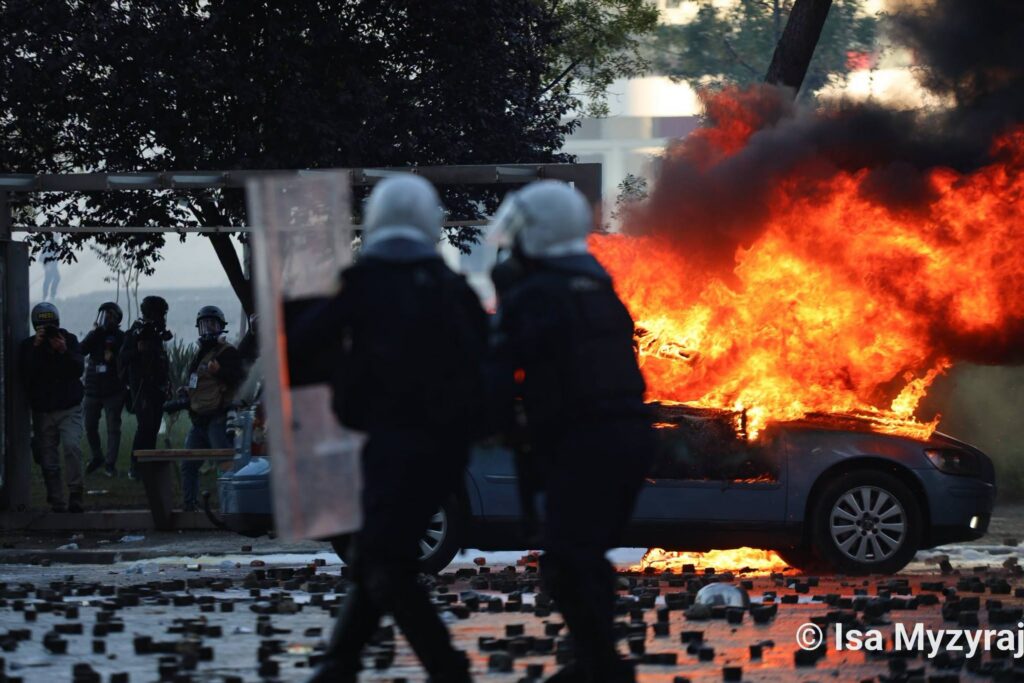
On the other hand, over half of attacks during protests were physical, with 41.1% resulting in injury. Violations were recorded during protests in Georgia, Serbia, Turkey, and Germany, among other places. Incidents included pressures and excessive use of force both by police and private individuals, demonstrating that protecting both the freedom of expression and freedom of assembly is crucial for safeguarding our democracies.
The so-called Super-Election Year, 2024, was marked by numerous national and regional elections across Europe. The elections laid bare growing political polarisation across Europe, and amid this tense environment, journalists and media outlets covering the elections faced a surge in attacks and intimidation. MapMF registered 205 election-related cases, with significant incidents in Georgia, where police violence and attacks by private individuals were particularly prevalent, resulting in injuries in 72.4% of cases.
Foreign Agent Laws, which seek to curb independent media and civil society organisations under the pretext of combating foreign influence, have raised growing concerns for media freedom organisations. Georgia, Bosnia and Herzegovina, and Slovakia adopted such laws, while Bulgaria, Turkey, Moldova, and Hungary have seriously considered their adoption.
News of spyware and targeted surveillance of journalists have also shaken the media several times in the past year. Six recorded cases involved software like Pegasus, Predator, Graphite, and NoviSpy. The purchase of these tools is often linked to the governments, however, the attackers remain unidentified in 75% of cases. The most recent examples came from Italy and Serbia, where journalists were targeted through social media applications. Graphite software targeted 90 WhatsApp users, including Italian Fanpage Editor-in-Chief Francesco Cancellato, while two BIRN journalists were targeted by Pegasus in Serbia.
MapMF has documented a continued pattern of spoofing and deepfake attacks, with around 30 cases affecting 60 individuals. These attacks often involve fake websites, fraudulent advertising, and manipulated videos or images, with many incidents linked to Russian propaganda channels spreading disinformation. 80% of those behind spoofing attacks remain unidentified, contributing to high levels of impunity.
Over the past year, environmental reporting has become increasingly dangerous, with around 40 cases affecting nearly 60 journalists recorded. These journalists face threats and obstructions while covering issues, such as natural disasters, waste management, mining, and pollution. Examples include journalists reporting on the aftermath of the DANA storm in Spain, as well as those targeted with legal threats or defamation by private companies or politicians for reporting on waste management, mining, or pollution.
The increasing number of attacks against journalists and media entities underscores the urgent need for greater protection and support for press freedom. This WPFD needs to highlight issues faced by journalists and push governments to scale up their responses to resist and remedy this challenging environment. This includes prompt and effective implementation of the European Media Freedom Act, and Anti-SLAPP Directive, as well as related acts such as the Digital Services and Digital Markets Act. Moreover, we urge the European Union to mainstream media freedoms and protection of journalists in the upcoming policy dialogues, including EU Democracy Shield[7]. The MFRR partners reiterate that there is no democracy and security without media freedom in Europe.
Media Freedom Rapid response partners will discuss these and other topics during a series of events marking WPFD, on May 5th in Brussels. You can register to some of them using these links.