



ECPMF joined The Coalition For Women In Journalism and the undersigned national and international press freedom organisations to demand an end to the systemic violence against journalists in Turkey, especially at the hands of the police. Routine weaponisation of state machinery to aid in press repression in a country that claims to be a democracy is appalling. Police overreaches against the press are in blatant violation of democratic principles and the Turkish constitution. We call on the Erdoğan government to ensure effective measures to restrain the police against journalists and media workers.
The Turkish interior ministry’s failure to hold the police accountable for its overreaches and to prevent violations against the press implies complicity. The federal body oversees the police and can easily step in to prevent violence against journalists. Indifference indicates that the government is actively condoning, and benefitting from, encroachments on press freedom. The CFWIJ stresses that women journalists bear the brunt of such state policies disproportionately. We, and the undersigned press freedom defenders, call on the Turkish authorities to ensure effective measures are in place to allow journalists to report freely and without threat to their safety – from the state or otherwise.
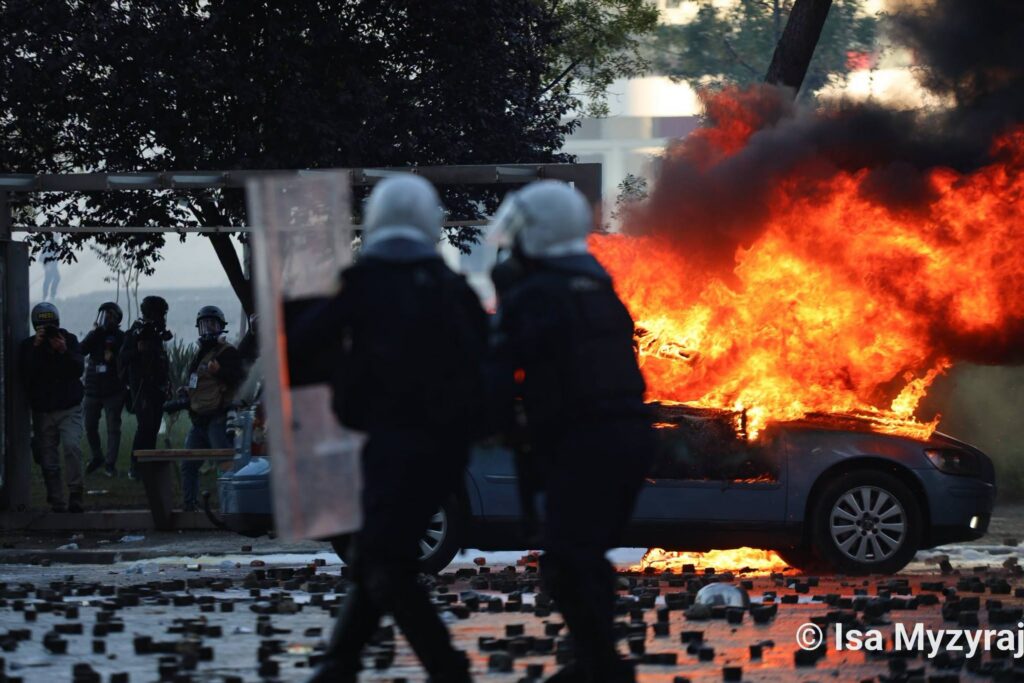
As of June 3, the CFWIJ has documented at least 27 cases of police overreaching against journalists this year. Women journalists and media workers are routinely targeted by the police. They have been subjected to tear gas, baton charges, verbal and physical abuse, have faced excessive force, physical attacks, sexist attacks, arbitrary detentions and other types of threats in the field. The police’s hostile and aggressive attitude towards journalists is also evident in the harsh treatment meted out during raids and arbitrary “inquiries”. A sharp rise in police violence against journalists was observed this week as the authorities clamped down on public events commemorating the ninth anniversary of countrywide anti-government protests, which began in Gezi Park, İstanbul, on May 28, 2013.
On May 31, 2022, at least six journalists were detained by police in Istanbul, held overnight and prevented from covering the events at Taksim Square. Four of them were women. Flash News editors Dilan Polat, Sevda Doğan and Derin Aydoğdu, and Evrensel Daily editor Meltem Akyol were detained, beaten, held overnight and prevented from covering the events at Taksim Square. Some journalists, including at least four women, were not even allowed to reach the site and were detained while on their way. Other media workers at the public event were subjected to tear gas and manhandled by officers as police tried to disperse the crowd.
Describing the moments of her detention to the Evrensel Daily, Meltem said police officers beat her and damaged her equipment, including the camera she had strung around her neck. When Meltem told the officers that she is a journalist, a policeman said “you were not my journalist”. Another police officer threatened Meltem and said “We will show you journalism”. Meltem recounted the same in a video she posted on Twitter.
Similar incidents were reported in other public ends being held across the country to mark the 2013 protests, which lasted over a month and left scores killed and thousands injured. The next day, two female journalists were obstructed and prevented from filming a public gathering in Ankara to mark the killing of activist and protestor Ethem Sarısülük in 2013. The journalists were deliberately prevented from documenting the police’s use of excessive force to disperse the demonstrators. Despite showing their press cards, they were not allowed to reach the site.
Journalists are frequently targeted by the police while in the field and later subjected to torturous legal harassment through inquiries and trials, whereby the process serves as punishment. In this year alone, the CFWIJ has documented nine new cases and 37 ongoing cases of women journalists facing severe criminal charges for reporting on stories of public interest. Vexatious lawsuits designed to exhaust the financial and legal resources of the defendant, or SLAPPs, are commonly used to target journalists reporting news unfavourable to government higher-ups and other influential elites.
A proposed bill currently tabled before the Turkish parliament purportedly aims to combat “fake news” has been widely criticised for enabling further expansion of the government’s already controversial control over the internet and media. It also calls into question press accreditation authorised by the Directorate of Communications to existing media outlets. If enacted, the law could allow the government to further narrow down journalistic activities, critics say. The CFWIJ and the undersigned register strong protest against the draft bill. We call on the Turkish legislature to ensure the law respects the rights of the independent press as enshrined in the country’s constitution.
The CFWIJ and the undersigned stress that women journalists no longer feel safe in the field. They are harassed for their work while on the ground, in their homes and their workplaces. News media houses critical of the government are also targeted. It is extremely difficult for journalists to do their jobs while facing police violence, unwarranted raids, physical and legal harassment and detentions. The authorities must allow the independent press to do its work and hold power to account.
We invite everyone to join our campaign to raise awareness and to help us support women journalists on the ground. Join us in calling on the Turkish government to say enough to press repression, police overreaches and abuse of law to silence journalists. It is the work of the independent press to speak truth to power and hold it to account. No democracy can flourish without it and no country can hope to progress if free speech and press freedom is blatantly violated in this manner. We demand of the Turkish authorities to ensure journalists are able to report freely and safely without government interference or retaliation. Know more about violations against women journalists in Turkey here.