
The Media Freedom Rapid Response (MFRR) and the SafeJournalists Network (SJN) today raise alarm over numerous incidents of intimidation and obstruction faced by journalists covering the Albanian parliamentary elections. Since the 11 May election, at least 20 journalists and media entities have faced reporting interference and pressure, including from public officials. All incidents were captured in multiple videos.
Throughout election day, at least five journalists covering the vote experienced alarming incidents across the country, including verbal abuse, physical aggression, and interference in their reporting. Incidents documented by the MFRR and SJN on that day include the physical assault of journalist Armando Rabi in Gjirokastër, the forced deletion of recorded materials from Erisa Xhindole’s phone in Pogradec, and a violent confrontation involving Syri TV’s Ambrozia Meta and crew by Socialist Party MP Erion Braçe, during a live broadcast from an unofficial electoral office in Tirana.
Journalists also faced arbitrary restrictions by voting center staff in violation of Albania’s electoral code. Accredited media observers in Durrës were reportedly prevented from documenting voting, while in Saranda, Euronews Albania’s Enriko Gaba was allegedly limited to 15 minutes of filming, again in violation of the official rules, which permit media workers access. Gaba had previously experienced obstruction from elected officials during the municipal elections in August 2024.
In the context of elections, public officials have a particular duty to ensure transparent electoral processes, allowing journalists to scrutinise campaigns, voting procedures, and vote counts without hindrance or violence. These incidents raise concerns regarding the state of press freedom and the free flow of information in Albania, with authorities failing to provide the environment for fair, balanced reporting and transparency during the electoral process.
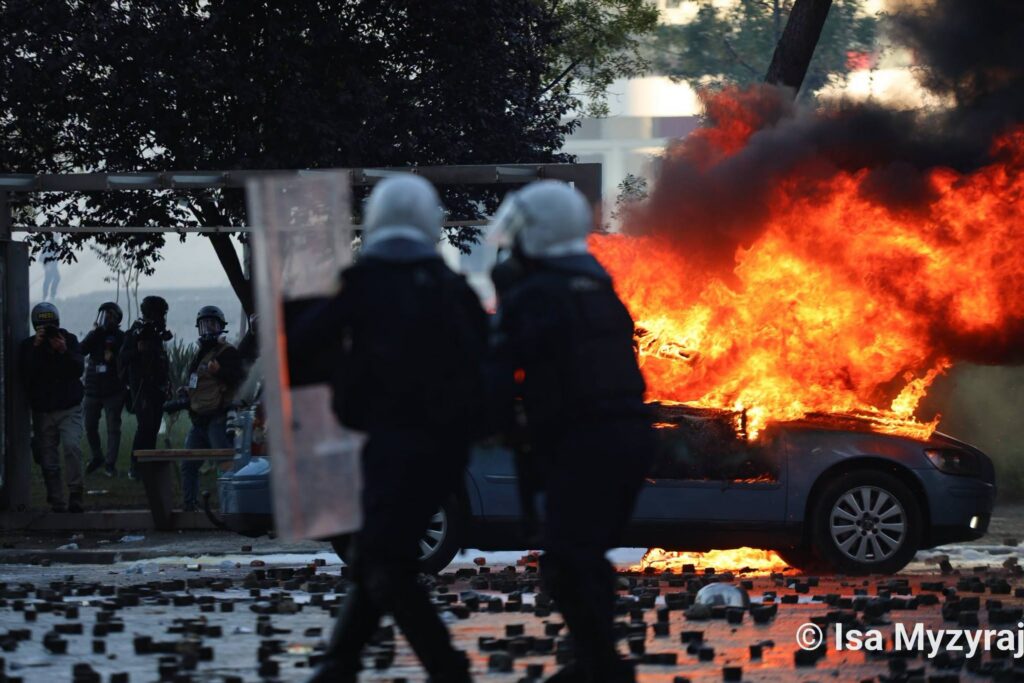
Following the voting results, other incidents have been reported involving officials of the opposition Democratic Party of Albania (DP). At least 10 verbal abuses were documented as journalists were covering the party’s defeat. Among them, Democratic Party General Secretary Flamur Noka repeatedly discredited and denied questions to Report TV and A2 CNN journalists. During the Democratic Party protest organised on 16 May to denounce alleged electoral fraud, Euronews Sara Demushi had her badge for the concurrent European Political Community Summit grabbed by party official Edi Paloka. This physical confrontation, along with insults and obstruction of recording by other party officials, fueled hostility from DP supporters in the protest, prompting some journalists, including Demushi, to leave for their safety.
Therefore, the MFRR and SJN call on Albanian authorities to ensure prompt, thorough, and independent investigations into all reported cases of violence, intimidation and obstruction against journalists by public officials and private individuals.
In the wake of the election, the MFRR and SJN urge the re-elected Socialist Party administration to take concrete steps to strengthen press freedom in Albania, and for all political parties to refrain from interfering with journalistic work and to publicly condemn all forms of hostility against the press.