




Critics warn: proposed law could seriously undermine the independence of public media
Journalists and media freedom groups are urging Slovakia’s MPs to reject the proposed public service broadcasting bill scheduled for parliamentary review next week. Despite recent amendments to the bill, the new structure would lead to the politicisation of the broadcaster in breach of the European Media Freedom Act.
The public broadcasting bill aiming to replace Radio and Television of Slovakia (RTVS) with a new entity, Slovak Television and Radio (STVR), will be discussed by the Parliament next week after its finalisation by the government in May.
If passed into law, the governing coalition will also remove the current Director-General and supervisory board before the end of their legal mandates.
The new Director-General will be appointed by the new Board of STVR, which will consist of nine members, five appointed by the Parliament and four by the Ministry of Culture. All their mandates would start at the same time. This would hand the ruling majority effective control over the Board and, therefore, the Director General, leading to the likely rapid politicisation of the new public television and radio channels.
The ruling coalition has persistently accused the public media and its journalists of bias and political activism and has made no secret of its desire to assert control over it through this ‘reform’.
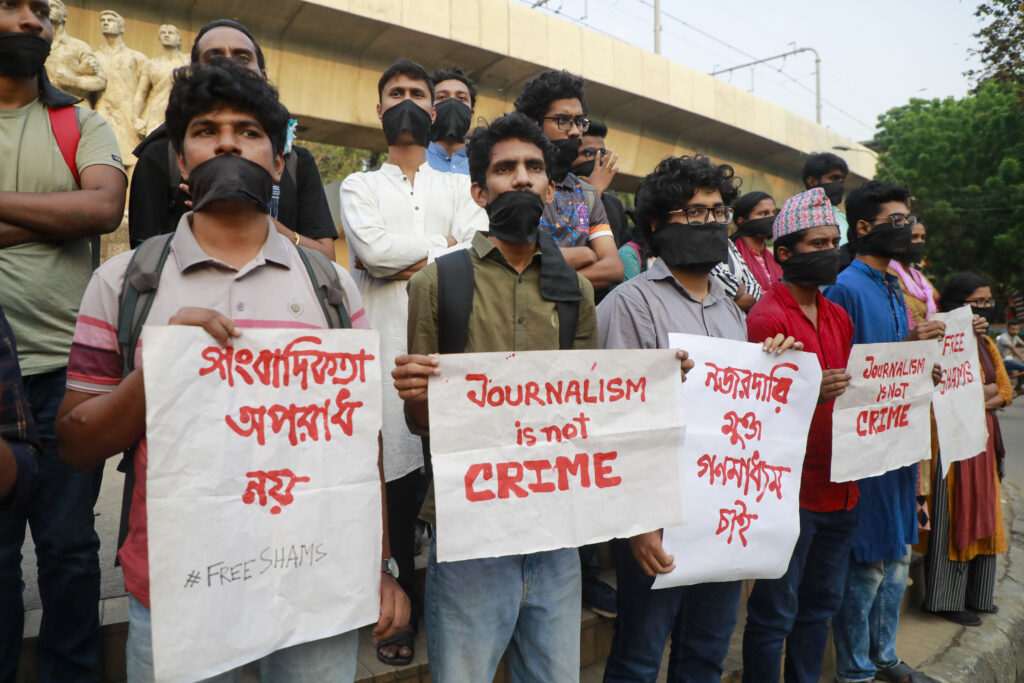
The initial bill, published in March, provoked a string of protests led by RTVS’s journalists who published a petition expressing fear that the new law will create “a tool for political control of RTVS for any government in power”, adding that “free and independent public media should serve all citizens of Slovakia, not the power ambitions of any parties.”
Slovakia’s President, Zuzana Čaputová, European Commission Vice-President Věra Jourová, as well as many international organisations also expressed concerns including that the law may breach provisions for independence laid out in the European Media Freedom Act.
As a result, the government has since withdrawn some of the more vexatious elements of the law, including a provision for a new politically appointed Programme Council to coordinate the programming.
Despite these modifications the bill still provides for the politicisation of the public broadcaster by the government that would fatally compromise its independence. It is therefore still contrary to the European Media Freedom Act’s provisions on the independence of the public media.
Moreover, the law has done nothing to secure sufficient, stable and independent funding which is essential to ensure STVR’s independence and fulfilment of its public service mission. In 2023 Slovakia replaced the licence fee model with direct state funding increasing its dependence on the government.
Our organisations have seen how easy it is for governments to undermine the independence of public broadcasters and how serious the effects of such a politicisation can be for society as a whole.
The tragic shooting of Prime Minister Robert Fico against the background of a polarised society shows that the need for pluralistic and independent public media, that can facilitate debate across the political spectrum in a time of crisis, has never been greater.
Signed
International Press Institute (IPI)
Committee to Protect Journalists (CPJ)
European Broadcasting Union (EBU)
European Centre for Press and Media Freedom (ECPMF)
European Federation of Journalists (EFJ)
Free Press Unlimited (FPU)
OBC Transeuropa (OBCT)
Reporters Without Borders (RSF)