
President of the European Commission President Ursula von der Leyen
President of the European Council António Costa
President of the European Parliament Roberta Metsola
Hearing of High Representative/Vice President-designate Kaja Kallas, European Parliament
Dear President Ursula von der Leyen,
Dear President António Costa,
Dear President Roberta Metsola,
Dear High Representative / Vice-President Kallas,
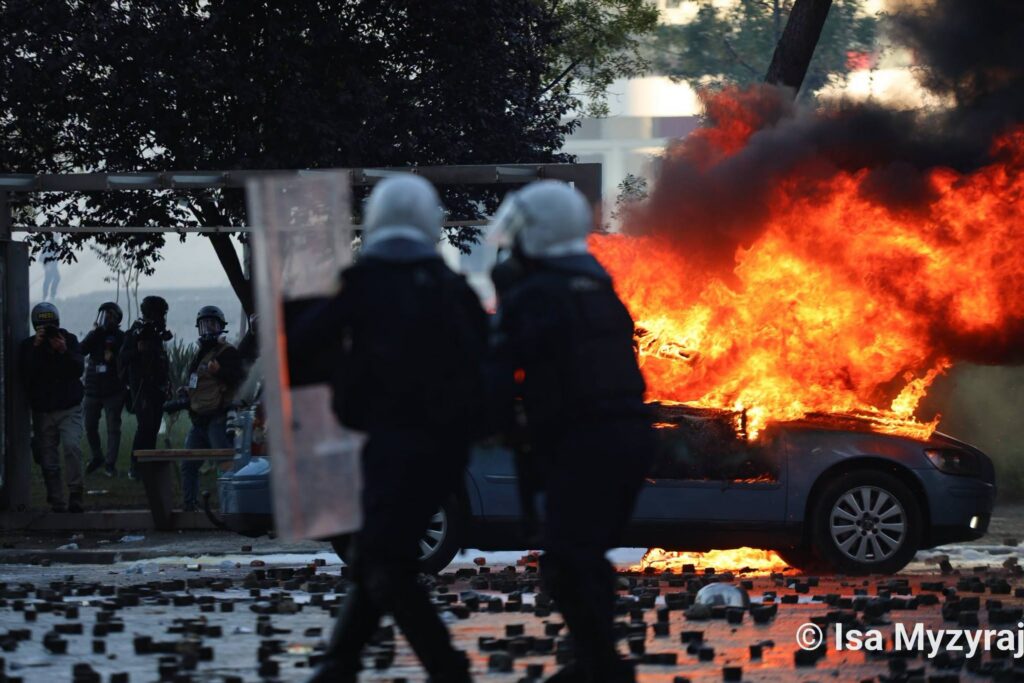
We, the undersigned international media freedom, journalists, and human rights organizations, are writing to express our deep concern about violence being meted out on a daily basis in the streets of Tbilisi that are deliberately targeting journalists. We call on the European Union to use all its influence to bring a rapid end to the repression of journalists in Georgia.
The scale of the crackdown on the media since November 28, following the ruling Georgian Dream party’s decision to halt Georgia’s negotiation talks with the EU, has been unprecedented.
More than 90 media workers have experienced physical attacks, verbal abuse, or obstruction as police violently dispersed pro-EU demonstrations. In several cases, journalists equipment has been damaged, destroyed or confiscated. The vast majority of the injured journalists work for independent and government-critical outlets based in Tbilisi.
This brutal crackdown on the media in Georgia is not an isolated incident but part of a rapid deterioration of press freedom and of targeted violence and impunity for crimes against journalists, including those committed during protests earlier this year against the restrictive law on “Transparency of Foreign Influence.” Authorities have orchestrated smear campaigns against journalists and detained and imprisoned media workers. Despite repeated appeals to the Special Investigation Service, crimes against journalists remain largely uninvestigated, perpetuating a culture of impunity.
The scaling back of democratic freedom and rising authoritarianism in Georgia, an EU candidate country, cannot be overlooked. The European Union must stand firm in its commitment to defending press freedom and civil liberties in Georgia. We ask you, as the European Union leaders, to unequivocally and publicly demand that Georgia meets the following press freedom requirements:
- Provide safe and enabling environment for all journalist and ensure they can report the protests without obstruction
- Guarantee the safety of all journalists, including facilitating the delivery of newsgathering equipment, safety gear, and safety training;
- Ensure accountability for those responsible for all crimes against journalists. This must include fully transparent investigations and appropriate sanctions for all those involved.
We urge you to place effective pressure on the Georgian authorities to halt the crackdown and ensure accountability, which could include targeted sanctions against those responsible for attacks on journalists. Furthermore, we call on you to publicly demand that the Georgian Dream ruling party respect journalists’ right to report on ongoing demonstrations without fear for their safety
Thank you for considering our requests.
Best regards,
Signed by:
- International Press Institute (IPI)
- European Center for Press and Media Freedoms (ECPMF)
- European Federation of Journalists (EFJ)
- Free Press Unlimited (FPU)
- OBC Transeuropa (OBCT)
- ARTICLE 19 Europe
- Justice for Journalists Foundation (JFJ)
- Reporters Without Borders (RSF)
- European Broadcasting Union (EBU)
- Index on Censorship
- PEN International