



A delegation from the European Centre for Press and Media Freedom (ECPMF) recently concluded a fact-finding trip to Tbilisi, Georgia as part of a project funded by the National Endowment for Democracy (NED). Throughout the trip, ECPMF met with Georgian journalists and media workers, journalists working in exile in Tbilisi, NGOs, activists, political figures, the National Communications Commission, and the office of the Public Defender (Ombudsman) of Georgia. The aim of the trip was to expand ECPMF’s network in the country and to gain a better understanding of the press freedom situation on the ground. This included in-person meetings from 19-22 March 2024 and a series of online meetings over the course of the following month.
The meetings painted a picture of media freedom in crisis, with smear campaigns, unstable funding mechanisms, threats of physical violence, and restrictive legislation all looming large over independent journalists in a deeply politically polarised society.
Foreign agent law
The revival of the Georgian Dream party’s foreign agent law in early April has reignited fears of Russian-influenced legislation being used to silence critical voices. The proposed law prompted a wave of mass protests across the country. The draft law would require organisations who receive more than 20% of their funding from foreign sources to be labelled as “organisations pursuing the interests of a foreign power”. They would also be forced to submit annual financial declarations and a failure to register would result in heavy fines. Some independent media outlets told ECPMF that they feared the bill would result in their outlet being forced to shut down.
Targeting of media donors
Worryingly, the proposed foreign agent law was not the only instance in which ECPMF heard of the ruling party appearing to target the donors of critical outlets. Journalists with whom ECPMF met in Tbilisi expressed concern at government representatives directly contacting their donors to discredit or criticise their work. One such incident involved the Speaker of the Georgian Parliament writing to the donors of OC Media after the outlet declined to publish an op-ed he had written. The government’s targeting of funding sources represented an extreme point of concern for ECPMF and the meeting participants. Most critical outlets in Georgia rely heavily on donor funding and efforts to restrict that source of revenue present a serious existential threat to independent media in the country.
Physical violence
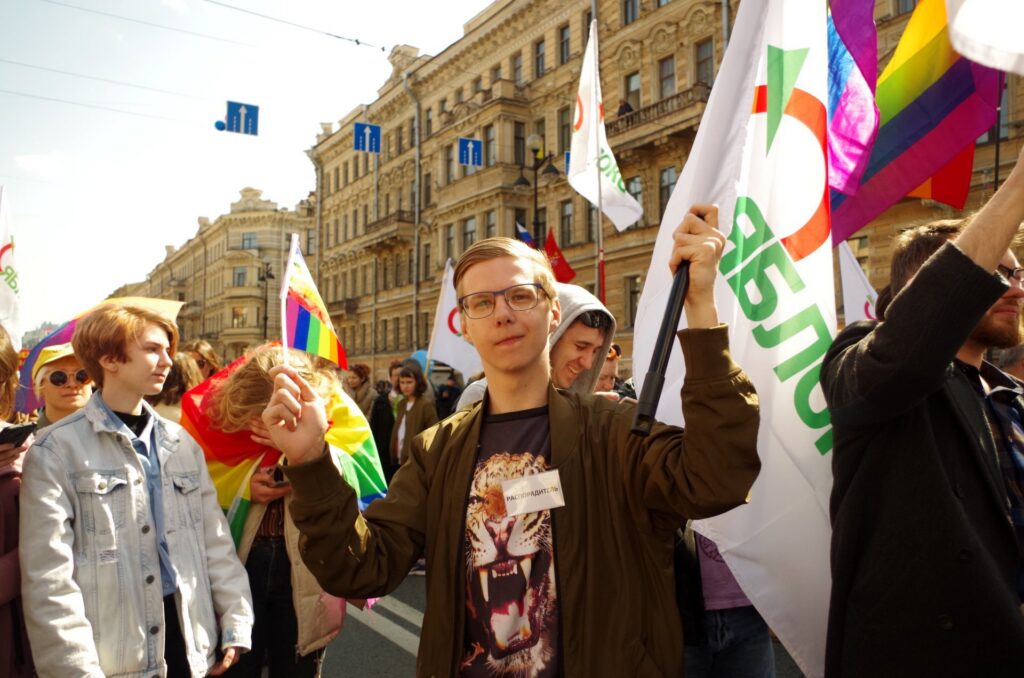
While physical violence towards journalists in Georgia is less of an immediate threat than it may have been in previous years, most media operate in the shadow of the major attacks which took place ahead of Tbilisi Pride in 2021, during which over 50 journalists were attacked by anti-LGBTQI protesters as part of a seemingly coordinated assault. One cameraman for TV Pirveli, Aleksandre Lashkarava, died following the attacks. All meeting partners reminded ECPMF of this particular incident, with its effects clearly still being felt amongst the journalistic community in Georgia. Physical attacks also took place in recent weeks following the revival of the foreign agent law, with journalists assaulted by police at protests and also by unknown individuals. Journalists’ fear of physical attacks was further exacerbated by regular attempts from government officials to discredit and smear the media. Some meeting participants noted how denigrating comments from members of the Georgian Dream party may have had an effect on the public’s view of journalists, potentially reinforcing an image of them as the enemy. In early March, ECPMF and the partners of the Media Freedom Rapid Response (MFRR) issued a statement denouncing a smear campaign against a prominent journalist by Speaker of the Georgian Parliament, Shalva Papuashvili.
Exiled reporting
Tbilisi once served as a hub for exiled journalists from Russia, Belarus, and Azerbaijan. However, ECPMF met with numerous exiled Russian journalists who expressed their concerns regarding their safety and security in Georgia. While these journalists are entitled to stay in Georgia for their first year without any documentation, this has left many exiled reporters in a state of limbo as they lack any legal status in the country. Examples of Russian journalists temporarily leaving the country and subsequently being denied re-entry were raised by meeting participants, as were stories of most Russian journalists’ applications for Georgian residency being rejected. These bureaucratic hurdles, combined with concerns around alleged surveillance from Russian intelligence representatives, have been deciding factors in convincing numerous exiled journalists to leave the country.
The meetings also revealed significant issues related to access to public information, deep polarisation between pro-government and pro-opposition television channels, an exodus of educated young people – including journalists – in search of better opportunities, a largely captured public broadcaster, and a lingering threat of vexatious litigation. Despite all this, a sizeable group of committed, independent Georgian journalists continue to withstand the pressure and provide vital information in order to hold power to account. These points, as well as those outlined above, will be explored in greater detail in a forthcoming ECPMF report on press freedom in Georgia.